The Boys' Brigade began in Glasgow. Sir William A. Smith, a former soldier and active church worker, was troubled by the boys who drifted into gangs once they left Sunday School. Drawing on the discipline of army life, he set out to give boys self-control, purpose and spiritual grounding.
On 4th October 1883, the doors of the North Woodside Hall in Glasgow were thrown open and the first Company was formed. Bible Class became the distinctive feature around which Company life was built. The seed sown in 1883 soon developed a new branch in Belfast: William McVicker, a prominent member of St. Mary Magdalene Parish, travelled to Glasgow, met Smith, and resolved to form a Company at home. Drill was a suspect — even illegal — activity in the Ireland of those days, but the first Irish Company was formed, and by 1890 the Belfast Battalion was established with eight Companies. It has grown into one of the Brigade's strongest Battalions.
When it was decided to form a Boys' Brigade Company at Bloomfield Presbyterian Church, it was James Price — one of the congregation's first elders — who proposed and then persuaded Lendrick McMaster to become Captain of the new venture.
The Company was born on Friday, 14th October 1927 at 8:00pm. That first evening, a contingent from the 1st Belfast Company put on a display of platoon drill, ambulance work, free exercises, games, tableaux and a drill-down, with a talk on camp from W.H. McVicker, Captain of the 1st and Honorary Battalion Secretary. The first enrolment followed on 18th December 1927, with McMaster as Captain and Stuart Frackelton, Gibson Price, Ellison Young and Robert Webb as Lieutenants. Attendance at that first meeting was disappointing — but numbers rose rapidly, and 54 officers and boys were enrolled in the first session.
The first enrolment took place on 18th December 1927.
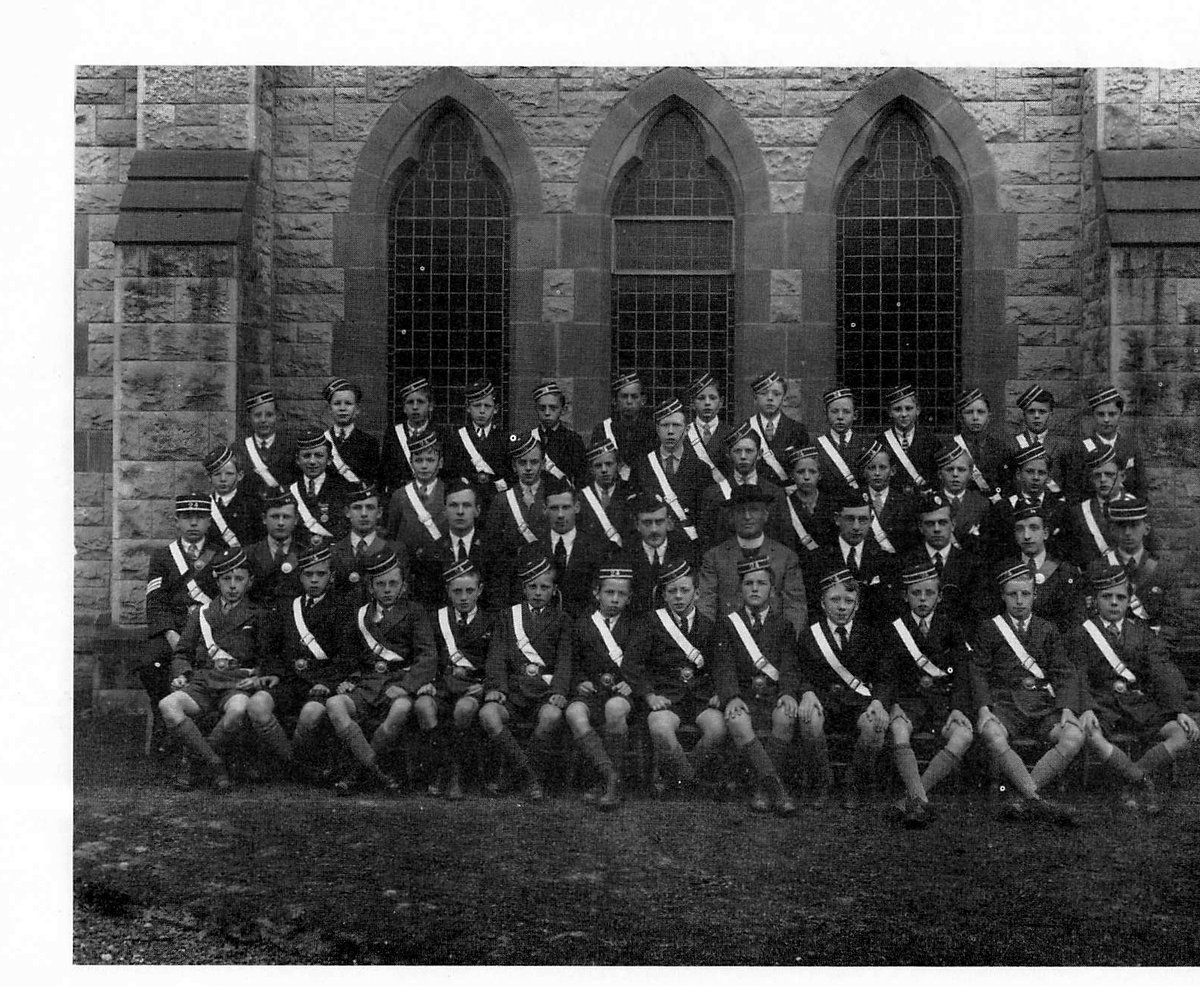
A swimming club was formed, a team entered the Battalion cricket league, and plans were laid for a bugle band and a boys' club — though it was always stressed that these activities were secondary to the main object: the development of Christian character.
Lendrick McMaster led the 24th for twenty-five years, and stamped his Christian character on generations of its members. A youth when the first world war ended in 1918, he had trained for active service, then entered the civil service and became a valued Secretary of the Northern Ireland Electricity Board, for which he was awarded the M.B.E.
"Nothing but the best was good enough. Discipline was firm… yet to each single lad who sought him out, Lendrick McMaster could be as warm as a true brother."
Shy and unassuming by nature — like Moses, "a meek man" — he nonetheless commanded a hall of rowdy boys with a single strident call of "Boys!!!!". A devoted churchman and for a time Session Clerk at Bloomfield, he abhorred anything smacking of intolerance or sectarianism. Under him the 24th earned a reputation in BB circles for high standards. In the early years the Company flourished: by 1933/34 three boys were awarded the King's Badge — the highest award in the Brigade — and the football team won the junior division of the Battalion League in 1938/39, by which time strength had risen to 75 all ranks.
When McMaster retired in 1952, the Kirk Session invited Henry O. Downie to succeed him. Harry was a foundation member of the Company as a boy, had graduated through all its non-commissioned ranks, and was a foundation member of the 24th Old Boys' Association. A family man with three boys of his own in the Company, he brought a remarkable understanding of growing boys together with firm discipline.
Appointed Captain in 1953, he found 52 boys on the roll and many keen on band work — the old kettle and rope drums made way for a new set. Under Harry the Company expanded its sports programme, especially football, and greatly developed its proficiency badge work. Camp was held at Kilkeel, Portrush and further afield, and in 1958 — the BB's 75th year — three of the 40 Belfast boys chosen for the national camp at Lilleshall came from the 24th. Mrs. Downie's encouragement and support were recognised alongside Harry's when he handed over the captaincy in 1963.
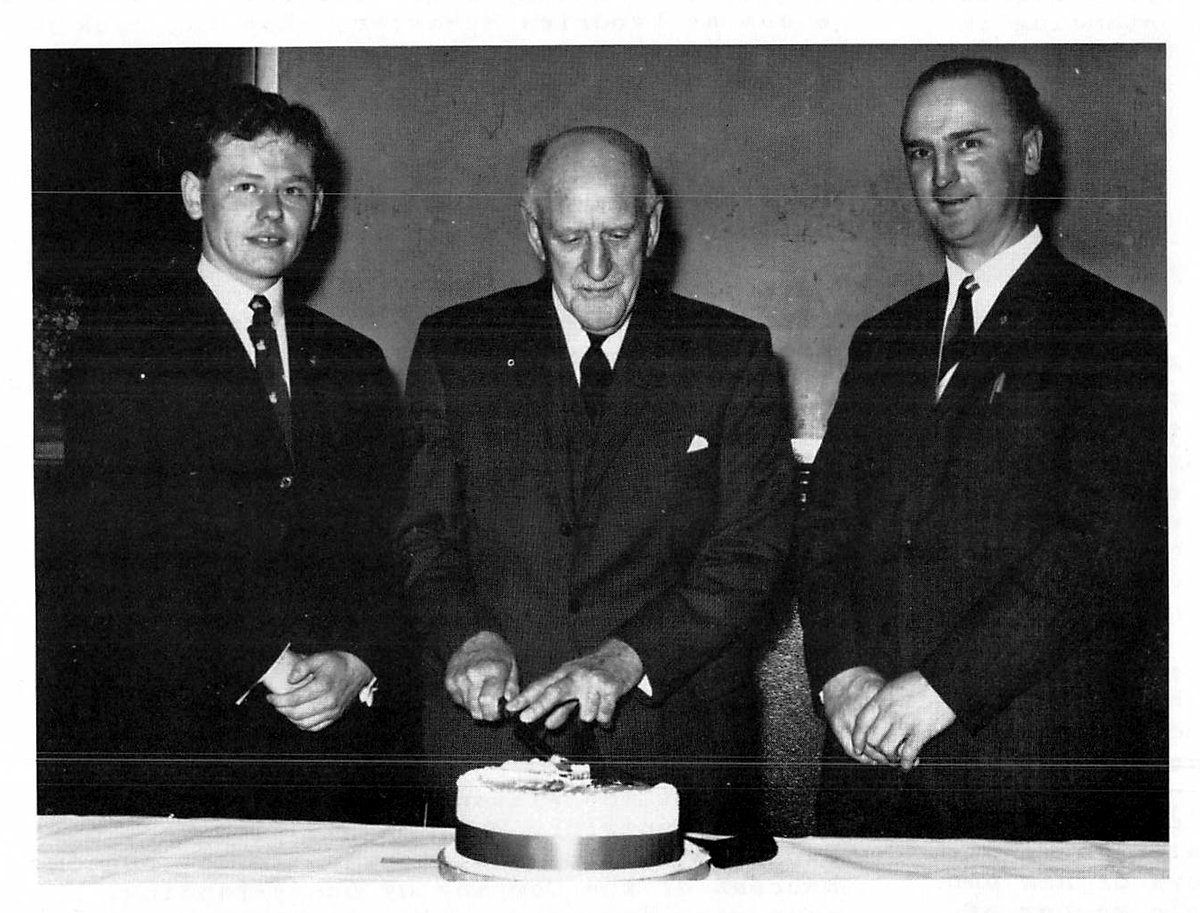
Trevor H. Wilson took over in 1963 as one of the youngest captains ever to command a large Belfast company. His association with the BB began early — his elder brother Ronald, later a Presbyterian minister in Portstewart, brought him as a small boy to the Life Boys. He won the coveted Challenge Cup as outstanding boy in 1956, and rose through Staff Sergeant, Warrant Officer and Lieutenant. He later made a courageous venture of faith, resigning a career in insurance to train for the Christian ministry.
His years saw rapid social change and new approaches to youth work. A period system was introduced to parade nights; total strength reached 100 officers and boys. Highlights included the renovation of the Company Hut, midnight hikes and weekends in the Mournes, and summer camp held for the first time in Scotland and later in England. In 1963 six boys received the Queen's Badge. By 1975 the Company owned canoes and a minibus, sailing and canoeing had been introduced, and the band finished first in the Junior Band Competition, won the drum corps competition, and — through Sgt. Roy Getty — took the individual drumming contest.
The Company's youngest have always fed its future. The Life Boy Team was founded in 1927 alongside the Company, led first by Lieutenant R.E. Young and then by J.S.B. Frackelton. In 1967 the Life Boys were redesignated the Junior Section, and in October 1970 "The Robins" were formed for boys of 5 to 8 years, providing a feed-through to the Junior Section and teaching loyalty to the Sunday School.
The best recruits have always been those who received their early training in the Junior Section — and most of the men who served as Officers began their BB service in the Junior department.
In 1945 former members moved to form an Old Boys' Association to preserve the comradeship of the ranks. It was formally constituted on 3rd October 1945, with its object the preservation and development of the BB spirit. The Association planned, plotted and in part paid for the Company Hut, formally opened by Mrs. E. Downie on 30th November 1946 — carrying out much of the building work themselves. "The hut," as it was affectionately known, served as their headquarters until it made way for the expansion of church premises.
The Company marked its first fifty years with a 50th Anniversary Inspection and Parade of Past Members. At the time there were around 70 boys on the roll, the Bible Class and Drill Parade were strong, and the Captain, Trevor Wilson, presented his 14th annual report. Greetings came from the Lord Mayor of Belfast, the Belfast Battalion President and Secretary, and Brigade Headquarters in London.
So caps off, and coats too, as we set off to complete the century believing that for "the 24th" the best is yet to be!— L. Rawson, Brigade Overseas Secretary, 1977
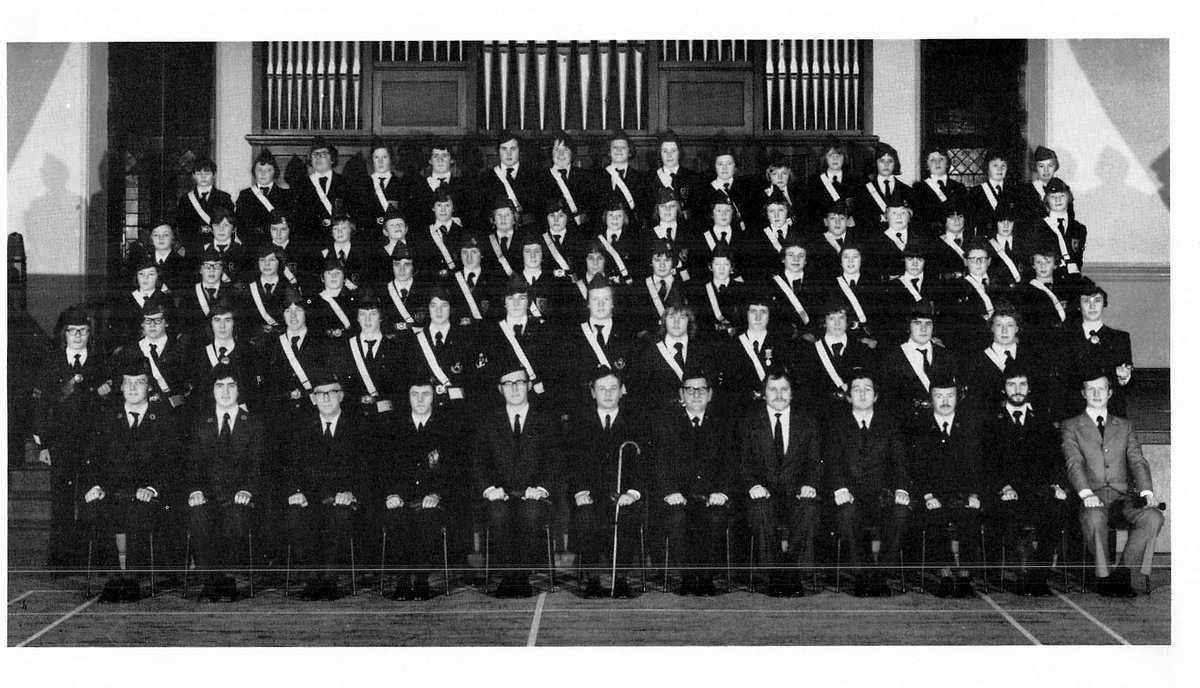
The second half of the 24th's century — from the Golden Jubilee to the centenary in 2027 — is the part of our story still to be gathered. We know the threads: the move to Monday nights, the Anchor Boys, the leadership of more recent captains, camps and bands through the decades, and the Company's life through the changing East Belfast of the late 20th and early 21st centuries.